Reflections on the Digital Business Module

To be honest, at first I thought that digital business was a very complicated concept, because it was a combination of digital technology and business, and more importantly, I was not familiar with digital technology before. However, after I completed the module of digital business model, I have a better understanding of digital technology and digital business model. And also, the learning of this module has greatly stimulated my interest in digital technology and digital business models. I think the biggest benefit of this course is that it can cultivate our ability to think critically and practice. Because after completing each stage of study, we need to write a blog post to discuss some of our thinking about the subject and also need to read other students’ blog posts for critical thinking and comment. This will allow more interaction between students on related topics, which will broaden our own insights. Therefore, I really enjoy learning this module.

Actually, digital technology has a positive effect on the development of business, and digital transformation has become the mainstream trend of enterprise development. According to the WORLD ECONOMIC FORUM(2016), the digital revolution is already transforming companies and the industry.

First of all, there is no doubt that with the rapid development and popularization of digital technologies such as the Internet, big data, cloud computing and artificial intelligence, we have entered the digital era. Today, the digital economy is playing an increasingly important role in global economic growth, and also the digital revolution has brought many changes. In the MOOC study on the theme of “Building a Career in the Workplace of Tomorrow” in the third week, I clearly realized the changes that digital technology will bring to future work. And this change includes challenges and opportunities. According to the conclusions of this course, in order to be able to benefit from this changing trend, we need to focus on digital literacy, technical skills and learning behaviors, which will enable us to adapt to the entire working life. This means being an effective, independent “lifelong learner”.

Similarly, in a blog post on “The Changing Role of Work Roles in the Digital Economy Era,” I have even more experienced the tremendous impact of digital technology on our work roles. Most articles argue that digital technology will benefit future work. For example, I read an article about “How digital disruption changed fashion designer“, which shows that artificial intelligence and big data can help designers better understand the needs of customers and make fashion design work easier. And also, I read two interesting articles, “ Have the changes to Refereeing gone too VAR” and “ The Rapid Development of Food Delivery Services” and then expressed my own opinion.
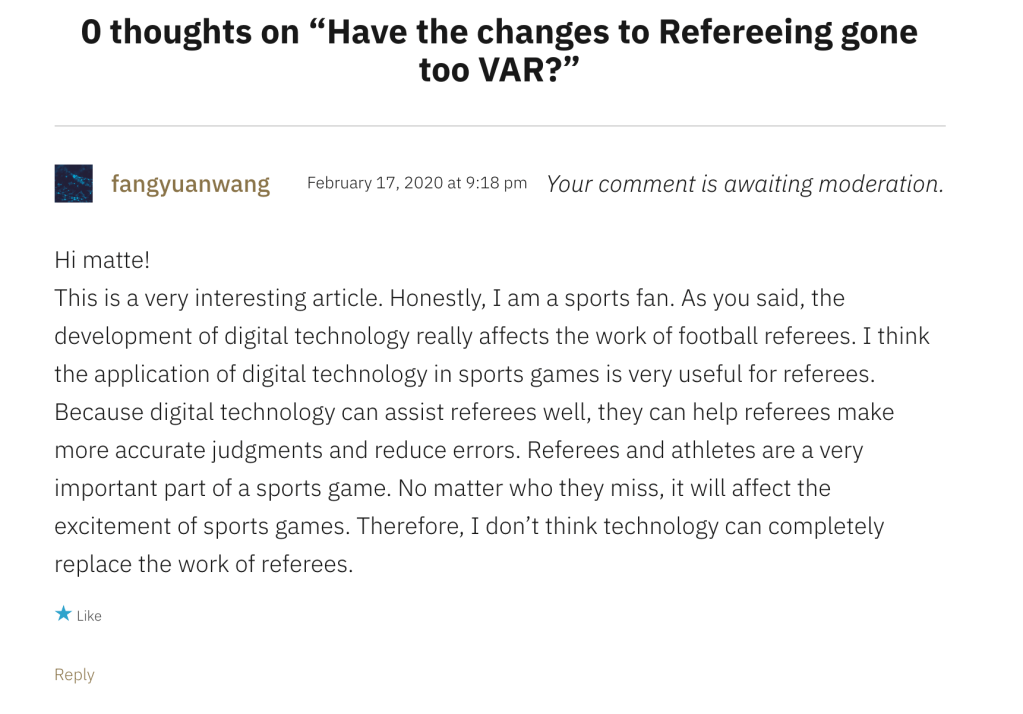
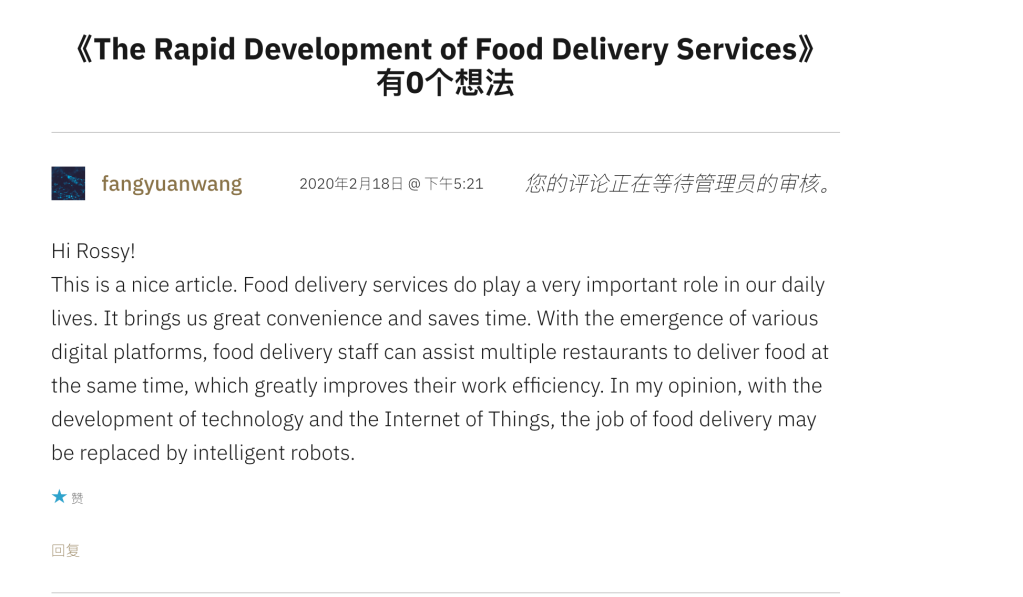
Source: https://bemm129mattjacksonphotography.photo.blog/2020/02/13/have-the-changes-to-refereeing-gone-too-var/comment-page-1/?unapproved=1&moderation-hash=c1cbbcd2dc371eadddc234c7e90c7b25#comment-1

In addition, digitalization is reshaping business models. According to Morgan(2019), digital transformation is a mainstream trend in corporate development, and executives of the company stated that the biggest benefit of digitalization is to improve operational efficiency. Actually, a digital business model is indeed an important factor in the success of a business and I saw many successful examples in my fellow blog posts such as Zara and Stitch Fix.
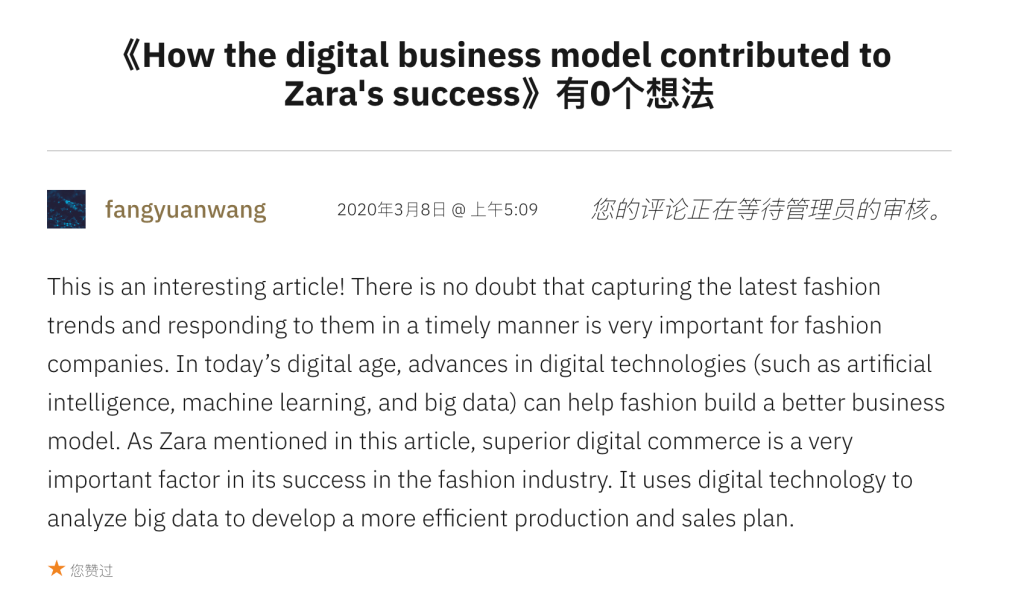
Source: https://kasiying.design.blog/2020/02/28/118/comment-page-1/?unapproved=5&moderation-hash=89901240f5b743f9a9b92ca006f6ea2a#comment-5
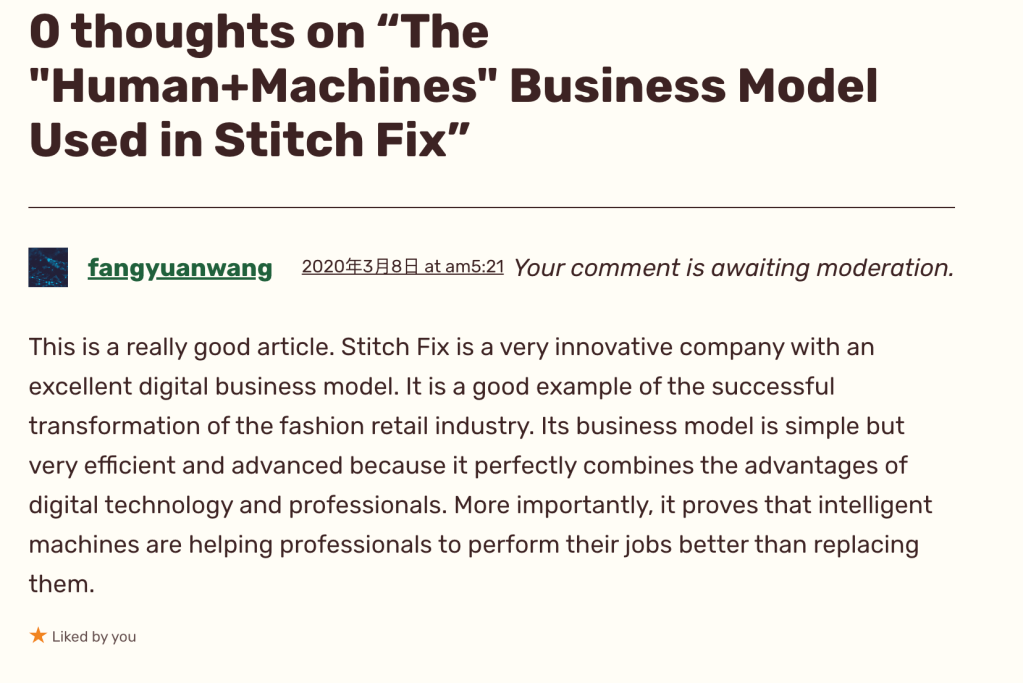
Source: https://cocoexeterblogphotography.photo.blog/2020/03/06/the-humanmachines-business-model-used-in-stitch-fix/comment-page-1/?unapproved=2&moderation-hash=d97ba648fc8ef6e18adb32c98757476c#comment-2

Finally, I also made a video to briefly summarize what I learned from the digital business module.

References

Morgan, B. (2019). 100 Stats On Digital Transformation And Customer Experience. Retrieved from https://www.forbes.com/sites/blakemorgan/2019/12/16/100-stats-on-digital-transformation-and-customer-experience/#2c3377023bf3

WORLD ECONOMIC FORUM. (2016). World Economic Forum White Paper

Digital Transformation of Industries: In collaboration with Accenture. Retrieved from http://reports.weforum.org/digital-transformation/wp-content/blogs.dir/94/mp/files/pages/files/digital-enterprise-narrative-final-january-2016.pdf

Stitch Fix: The perfect combination of data science and professionals

Source: https://www.stitchfix.com/

In 2011, Katrina Lake and Erin Morrison Flynn founded Stitch Fix. Their original idea is to provide people with personalized styling services online. Stitch Fix is a distinctive e-commerce company and it proves that humans can indeed build a better fashion retail business by data-power(Bercovici, 2017). Unlike traditional fashion retailers, Stitch Fix matches an excellent team of designers with a large amount of data to provide customers with personalized styling services online. Although Stitch Fix is a young company, it has achieved great success. As the company’s business continues to grow, Stitch Fix has achieved revenue growth of more than 20% for seven consecutive quarters since 2017(Turner, 2019). Today, Stitch Fix has grown from a start-up to a billion-dollar public company. And as of 2019, the company’s market value has reached $ 2.4 billion(PYMNTS, 2019).

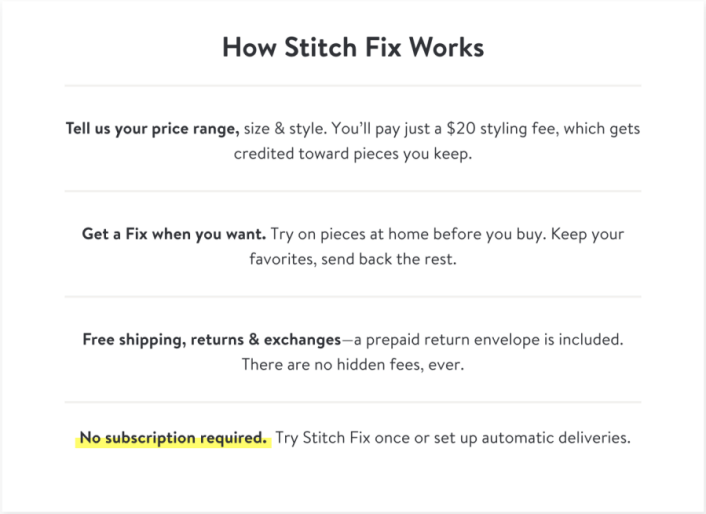
How Stitch Fix Works?

Source: https://www.stitchfix.com/

The customer’s personalized information is an important basis for Stitch Fix work, so the collection of customer information is the first and most important step in the entire service process. Stitch Fix provides a style profile on its own digital platform (both online and mobile) for customers to fill in to understand customer needs and wants such as customer preferences for fashion, price requirements, style, etc.

In addition, it also provides an optional feature that allow you to share your social media such as Instagram, so that your stylist can further understand your personality and style. After completing this step, Stitch Fix will uses digital technology(such as artificial intelligence and algorithms) to analyze the information provided by the customer and sent the results to the matching stylist, and then provide the customer with high-quality personalized styling services.

Stitch Fix business model

In fact, the business model of Stitch Fix is very simple. The stylist of Stitch Fix selects and sends clothes and accessories for the customer based on the result from data science and algorithm, and then the customer can keep the favorite items and return the others(Lake, 2018).

And customers only need to pay for the items they decide to keep. Each time Stitch Fix will send customers 5 items and charge a $ 20 styling fee(Chen, 2019). The key to Stitch Fix’s business is to combine data science and professional designers to achieve large-scale customized services.

Data science is a powerful tool for Stitch Fix

Data science is the core of Stitch Fix’s business. Although Stitch Fix is not a company in technology industry, it take data seriously and uses it to improve customer experience and retail.

First of all, Stitch Fix is hungry for more data. From the beginning of the service, it collects some key information (i.e. data) of the client through style profile. And by letting customers browse the different styles throughout the product line, it can collect a lot of data to help it better understand customers and the age and demographic trends shaping the fashion industry(Newman, 2019).

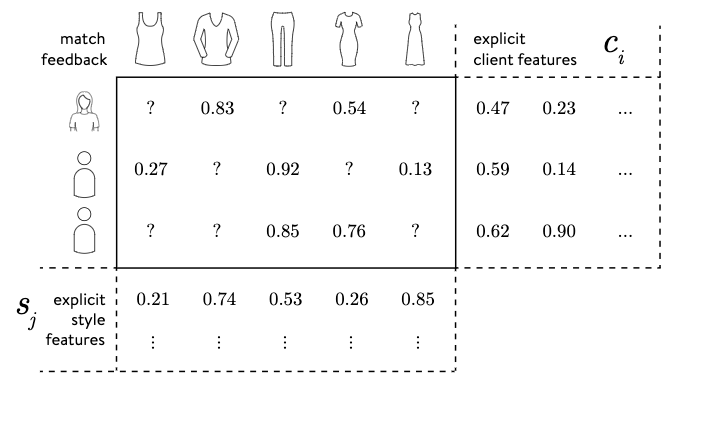
After obtaining a large amount of data, Stitch Fix made full use of this data and transformed them into useful information to provide a correct direction and basis for their business development. Machine learning algorithms are an important analysis tool for Stitch Fix. Through the algorithms built by Stitch Fix data science team, intelligent machines can dig deeper into the true needs of customers(Duczeminski, 2019). The intelligent machine can give the ‘matching score’ between the customer and a specific piece of clothing through algorithms.

Source: https://algorithms-tour.stitchfix.com/#recommendation-systems

With machine learning algorithms, the stylists can understand the needs of customers more scientifically and accurately rather than predicting by intuition alone. In addition, Stitch Fix not only uses data science to choose fashion for customers, it also applies data to company operations, style design, sales, inventory management, distribution, warehouse optimization(Li, 2020).

The combination of data science and human judgment

There is no doubt that data is critical to Stitch Fix, and so is human. After the machines and algorithms have completed the initial screening process, Stitch Fix hires professional human stylists to make decision for the final product delivery. The prefect combination of data science and human judgement is the core of Stitch Fix work, human stylists are key to understanding the nuances of a client’s requirements and ensuring their experience is personal(Gagliordi, 2018). For example, if a client makes a very specific request such as “I need a quick-drying sportswear to participate in sports next week”, after getting this information, the stylist can quickly find the right clothes for the client from the alternative box.

According to Hollis(2018), Stitch Fix’s “people-oriented” approach transforms artificial intelligence into intelligent augmentation, rather than letting machines completely replace humans. As Lake(2018) said that a good person working with a good algorithm is far better than the best person or just the best algorithm.

To sum up, Stitch Fix is an outstanding company that makes full use of the advantages of data science and humans and combines them well to achieve large-scale personalized services. More importantly, it proves that intelligent machines do not replace the work of professionals, but rather assist them and improve their efficiency.

References

Bercovici, J. (2017). How This Millennial Founder Created a $730 Million Fashion Startup–With the Help of an Algorithm. Inc. Retrieved from https://www.inc.com/magazine/201710/jeff-bercovici/stitch-fix-katrina-lake.html

Chen, C. (2019). he evolution of Stitch Fix: from a Harvard student’s apartment to a $2 billion company. Business Insider. Retrieved from https://www.businessinsider.com/stitch-fix-personal-styling-overview?r=US&IR=T

Duczeminski, M. (2019). How Stitch Fix Uses Data to Increase Sales and Engage Customers. Retrieved from https://postfunnel.com/how-stitch-fix-uses-data-to-increase-sales-and-engage-customers/ 

Gagliordi, N.(2018). How Stitch Fix uses machine learning to master the science of styling. Retrieved from https://www.zdnet.com/article/how-stitch-fix-uses-machine-learning-to-master-the-science-of-styling/

Hollis, S. (2018). The Stitch Fix story: changing the way millions of people dress with data. Retrieved from https://jilt.com/blog/stitch-fix-data/

Lake, K. (2018). Stitch Fix’s CEO on Selling Personal Style to the Mass Market. Harvard Business Review. Retrieved from https://hbr.org/2018/05/stitch-fixs-ceo-on-selling-personal-style-to-the-mass-market

Li, S. (2020). The Stitch Fix Story: How A Unique Prioritization Of Data Science Helped The Company Create Billions In Market Value. Forbes. Retrieved from https://www.forbes.com/sites/stevenli1/2020/02/17/stitch-fix-data-science/#53fe7f2f6023

Newman, D. (2019). Stitch Fix: A Useful Case Study For Retail’s Digital Transformation. Forbes. Retrieved from https://www.forbes.com/sites/danielnewman/2019/09/09/stitch-fix-a-useful-case-study-for-retails-digital-transformation/#44ec3a87d4c9

PYMNTS. (2019). Stitch Fix: Big Growth And A Surprise Turn To Profitability. Retrieved from https://www.pymnts.com/news/retail/2019/stitch-fix-earnings-revenue/  

Turner, A. (2019). Stitch Fix spikes after beating earnings and revenue expectations. CNBC. Retrieved from https://www.cnbc.com/2019/06/05/stich-fix-q3-2019-earnings.html

Changes in the work of email marketers

Changes in the work of email marketers

With the rapid development of Internet and digital technology, great changes have taken place in the field of marketing. When we look at the impact of digitization on the career path, email marketing is a profession worthy of our attention. Email marketing is undoubtedly the oldest digital marketing channel, and it is a catalyst for the Internet marketing revolution. By some estimates, email as a marketing tool has been around for at least 40 years (Wozniak, 2018). This makes it a great example of how a job will change in the age of the digital economy. Before we look at the trend of the profession of a email marketer, let’s start with the development of email marketing.

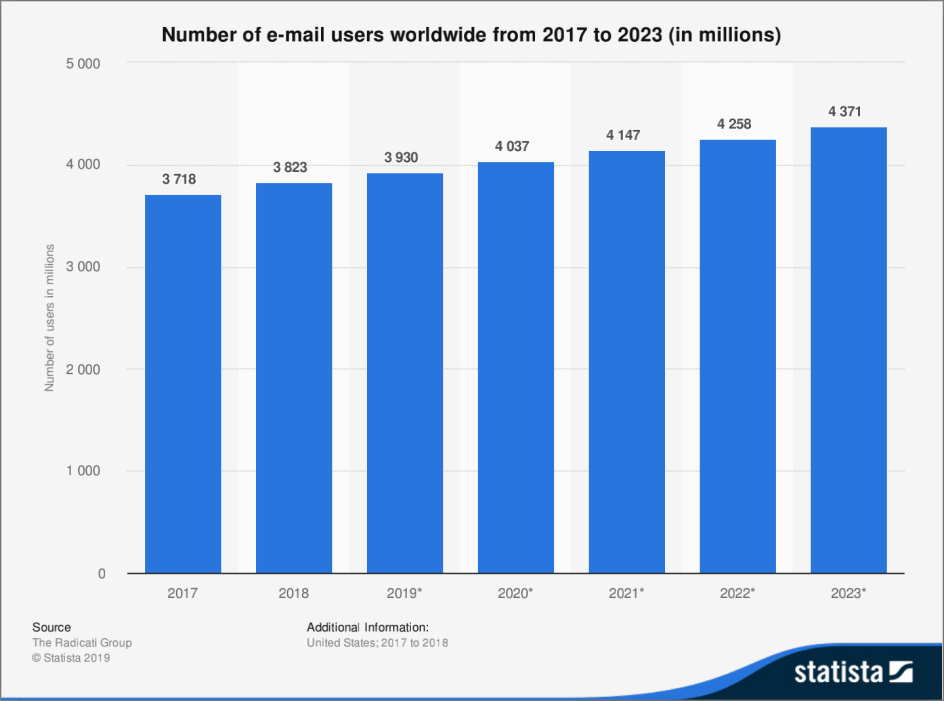
Number of e-mail users worldwide 2017-2023. Source: https://www.statista.com/statistics/255080/number-of-e-mail-users-worldwide/

Email has a large number of active users. According to the report of Statista(Clement, 2019), email users worldwide have reached 3.9 billion in 2019, and this number is expected to increase to more than 4.3 billion in 2023. What a surprising number, email actually plays an important role in our online life. When we first went online using Google Chrome, we needed to enter an email address to create an account. We even need an email address to create a social media (like Facebook) account. The widespread use of email makes it an important marketing tool for marketers to reach customers.

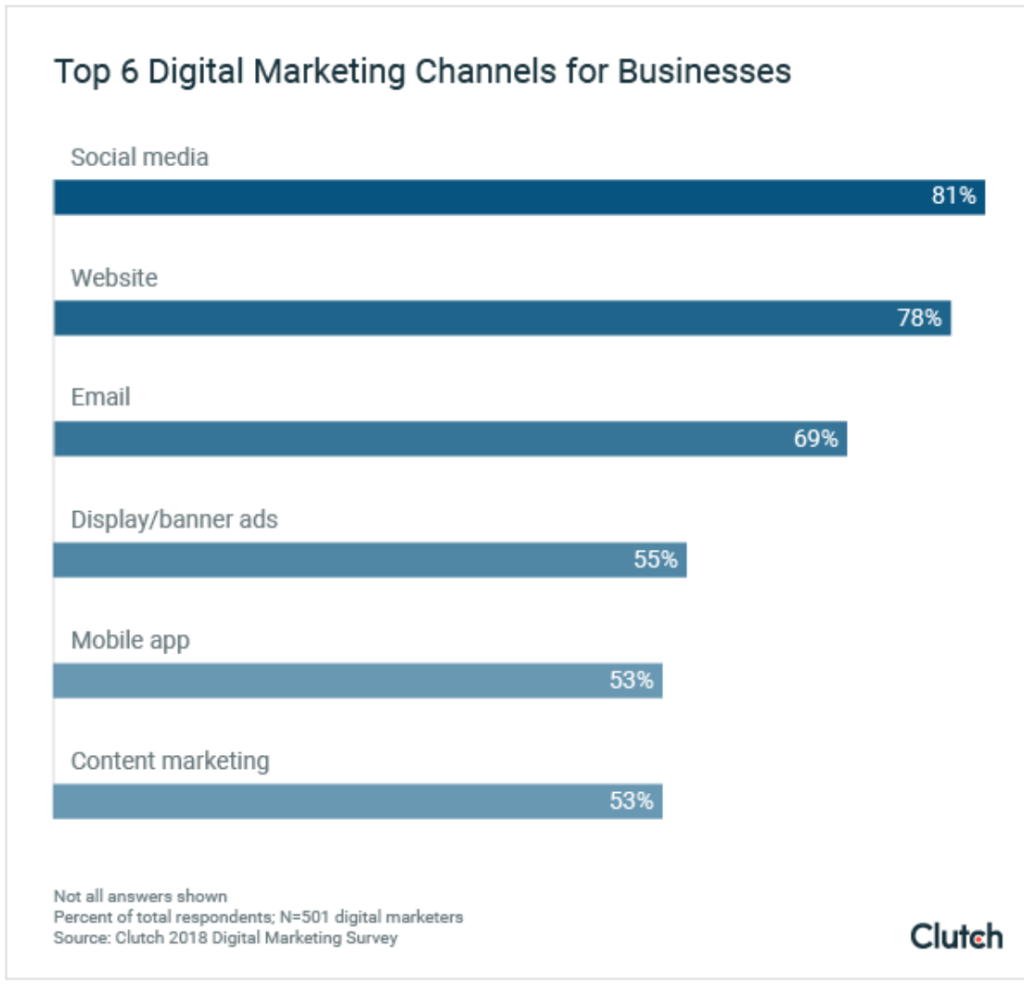
How Businesses Use Digital Marketing in 2018. Source: https://clutch.co/agencies/digital-marketing/resources/how-businesses-use-digital-marketing-2018

According to a recent survey, social media marketing, website and email marketing are the three digital marketing channels most commonly used by businesses in 2018(Herhold, 2018).

The data from Campaign Monitor(2019) shows that as of 2018, approximately 124.5 billion commercial emails were sent and received daily, and approximately 111.1 billion consumer emails were sent and received daily. Despite the explosive growth of new technologies and digital platforms, email marketing remains essential. The reason is clear that email marketing has a high return on investment(ROI).

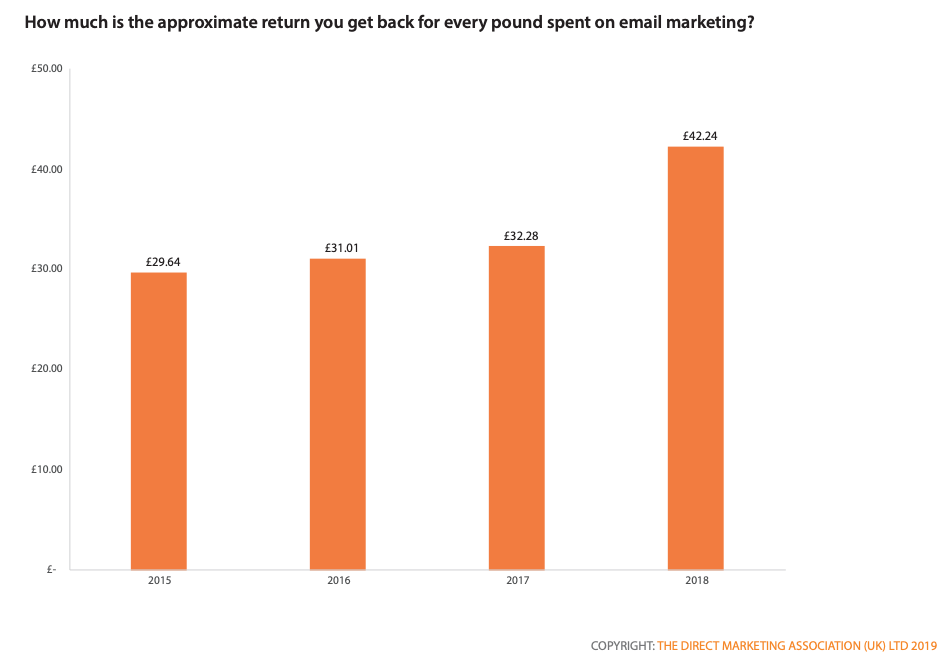
The DMA Marketer email tracker 2019. Source: https://dma.org.uk/uploads/misc/marketers-email-tracker-2019.pdf

According to the Marketer email tracker 2019 report, email marketing has a return on investment (ROI) of £ 42.24 for every £ 1 spent in 2018.

And this also shows that email marketing still plays a very important role in the digital economy. To be able to market more effectively to specific customers, this requires changing the role of the email marketer.

The daily business of email marketers has changed under the influence of digital technology. And this profession is a good example of how technological advancement can better help us get the job done instead of replacing us.

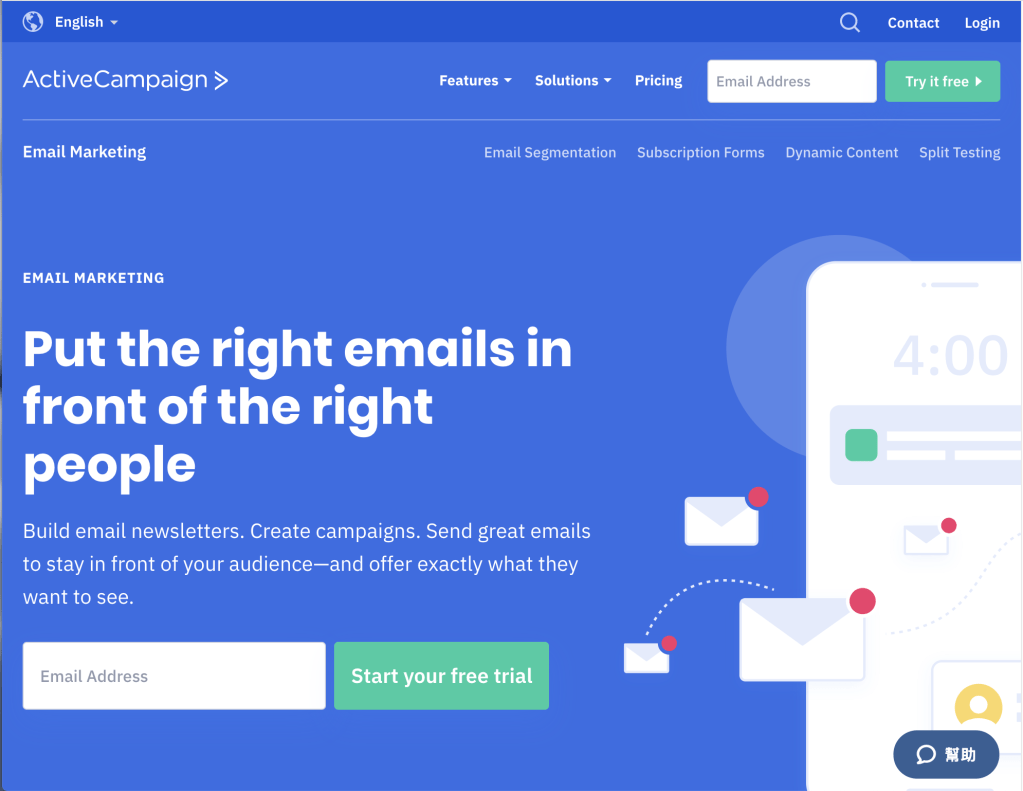
Nowadays, there are various email marketing automation tools such as Mailchimp, ActiveCampaign and Hubspot to assist email marketers in their work. Email marketers only need to enter some key information on these automated platforms to complete the editing and sending of emails.

Source: https://www.activecampaign.com/email-marketing

Taking ActiveCampaign as an example, it not only has excellent email automation capabilities, such as helping you build and manage email lists, and personalizing content based on the details and history of each contact. What’s more, it can also integrate with your CRM for marketing automation.

In addition, there are more and more technological innovations to continuously optimize email marketing to enhance the personalized experience. It is necessary to mention Phrasee, an artificial intelligence(AI)-based email marketing platform here.

This tool uses artificial intelligence to analyze and predict which marketing languages will be most effective in attracting your subscriber, and then generate and optimize email subject lines to bring more open, clicks and conversions to the emails you send. With the help of Phrasee, email marketers can create more personalized email copy by analyzing and predicting the needs and desires of subscribers intelligently rather than intuitively.

Obviously, technological innovation has simplified the work of email marketers, helping them analyze and predict customer needs more accurately, thereby creating more value for customers and organizations.

In the future, intelligence and automation will be the way to further change the role of email marketers.

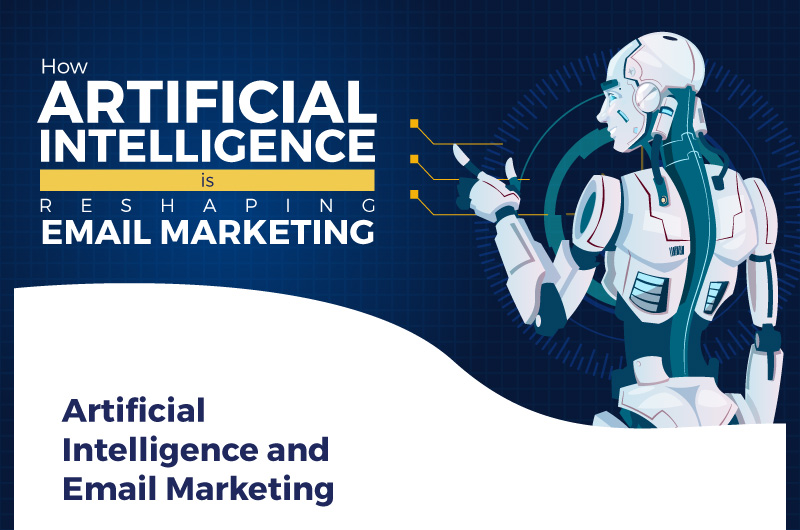
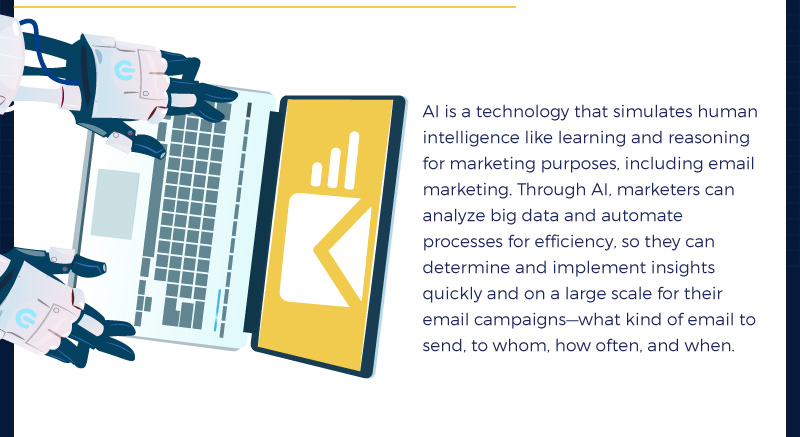
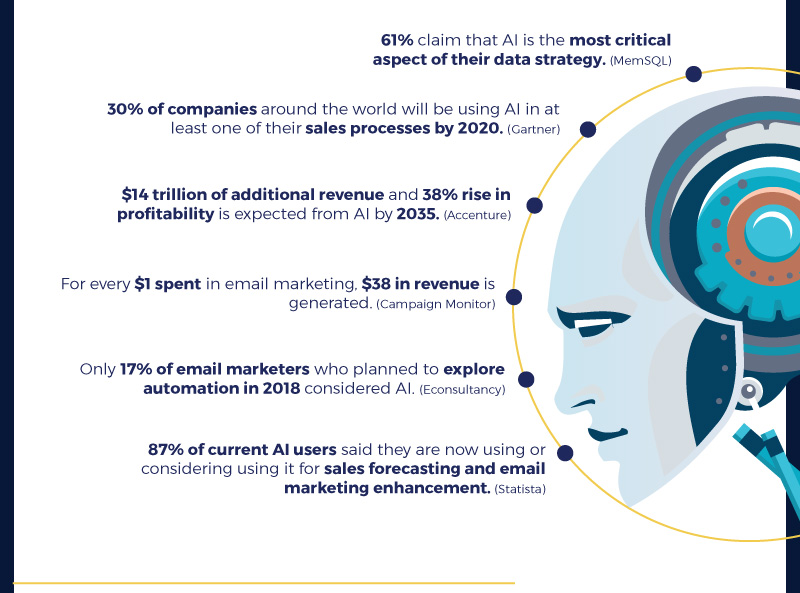
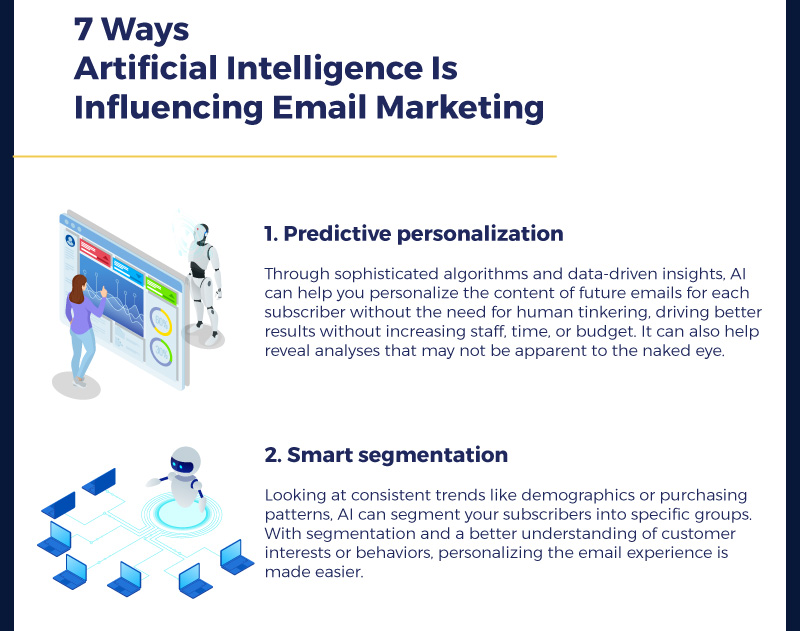
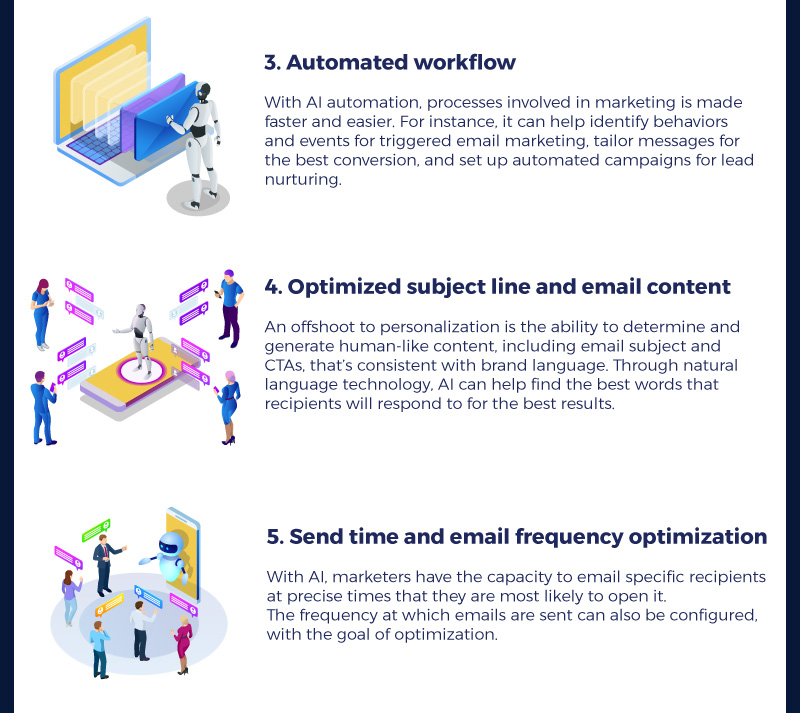
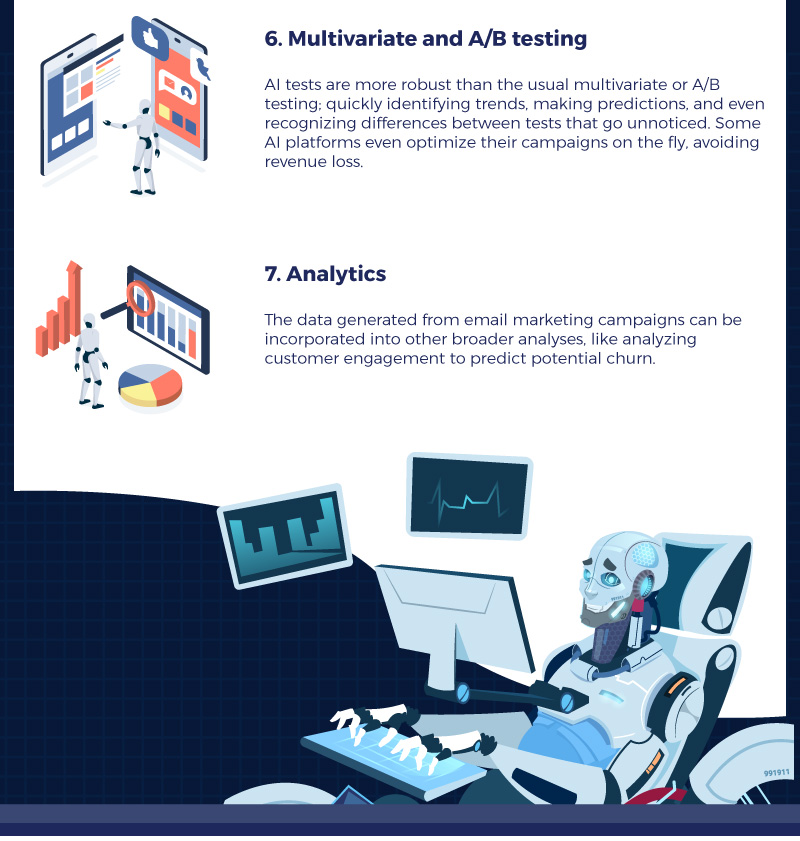
Today, artificial intelligence and machine learning have gradually been integrated into our work, and they will have a great influence on the work of email marketers in the future. As Beck(2019) said, artificial intelligence and machine learning are reshaping email marketing efforts. The applications of artificial intelligence and machine learning in the field of email marketing are: analyzing subscribers behavior and generating data-driven insights, intelligent segmentation of subscribers, optimizing the subject and text content of emails, and more.

Since then, email marketer workflow can be greatly simplified, and more importantly, they can get better subscriber insights and then to customize a personalized experience that meets the wants of their subscribes. According to Vrountas(2019), 74% of marketers say that personalization of targeted messages and emails can increase customer engagement.

Take a look at the following infographic, which shows how artificial intelligence is transforming email marketing:

Source: https://www.aithority.com/guest-authors/how-artificial-intelligence-is-reshaping-email-marketing/

To sum up, the work of email marketers will gradually move towards automation and intelligence. Supported by various intelligent platforms and technologies, email marketers can understand their subscribers’ wants faster and more deeply, and then create personalized experiences for them. And this requires email marketers to constantly learn to improve their ability in order to adopt and apply the latest technology in their work.

References:

Beck, C. (2019). How AI and Machine Learning is Reshaping Email Marketing. Retrieved from https://tweakyourbiz.com/marketing/e-mail-marketing/machine-learning

Clement, J. (2019). Number of e-mail users worldwide 2017-2023. Retrieved fromhttps://www.statista.com/statistics/255080/number-of-e-mail-users-worldwide/

Campaign Monitor. (2019, 21 May). The Shocking Truth about How Many Emails Are Sent. [Weblog] Retrieved fromhttps://www.campaignmonitor.com/blog/email-marketing/2019/05/shocking-truth-about-how-many-emails-sent/

Herhold, K. (2018). How Businesses Use Digital Marketing in 2018. Retrieved fromhttps://clutch.co/agencies/digital-marketing/resources/how-businesses-use-digital-marketing-2018

Vrountas, T. (2019). 68 Personalization Statistics Every Digital Advertiser Must Keep in Mind. Retrieved fromhttps://instapage.com/blog/personalization-statistics

Wozniak, T. (2018). What We Can Learn From Email Marketing’s 40-Year Evolution. Forbes. Retrieved fromhttps://www.forbes.com/sites/forbesagencycouncil/2018/06/12/email-is-not-dead-its-evolving/#3d94fdbe7545

Introduction

Hello everyone! Welcome to my blog. My name is Fangyuan Wang and I am studying Marketing. With the popularization of the Internet, digital business have become a hot topic of concern.

The development of digital technology has caused tremendous changes in the company’s business, which has also led to the emergence of digital business. Here I will take the digital business as the theme and share with you some logs about my personal opinions, insights and thoughts on the digital business. Let’s now start our journey into the world of digital business!

Design a site like this with WordPress.com
Get started